— The collection
Conch Piercing
Rings and studs for the inner ear.
Conch piercing jewellery for the centre of the ear, one of the most versatile cartilage spots. A large hoop to frame the ear, a stud for a subtle point, or a chain for a curated look. In nickel-free certified material, kind to a healing conch. Shop it in titanium or a gold finish, and pair it with a helix or tragus in a curated ear.
-
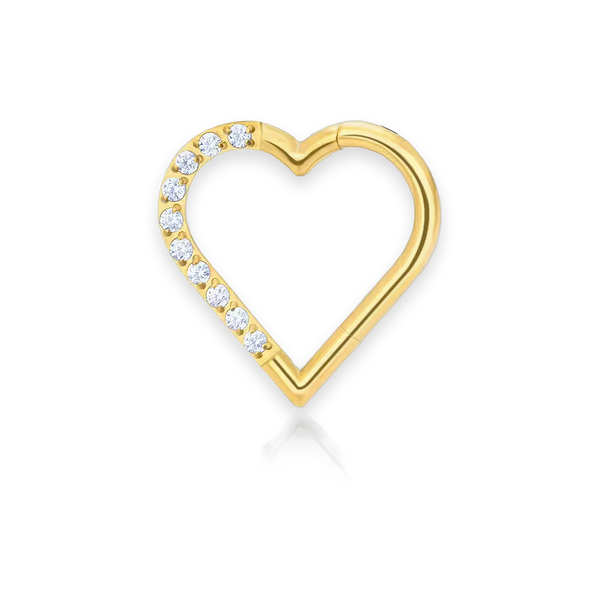
Gold Daith Heart Clicker
24,90€
-

Titanium Daith Heart Clicker
24,90€
-

Gold Cartilage Hoop
22,90€
-

Titanium Cartilage Hoop
22,90€
-

Gold Pavé Seamless Ring
23,90€
-

Titanium Pavé Seamless Ring
23,90€
-
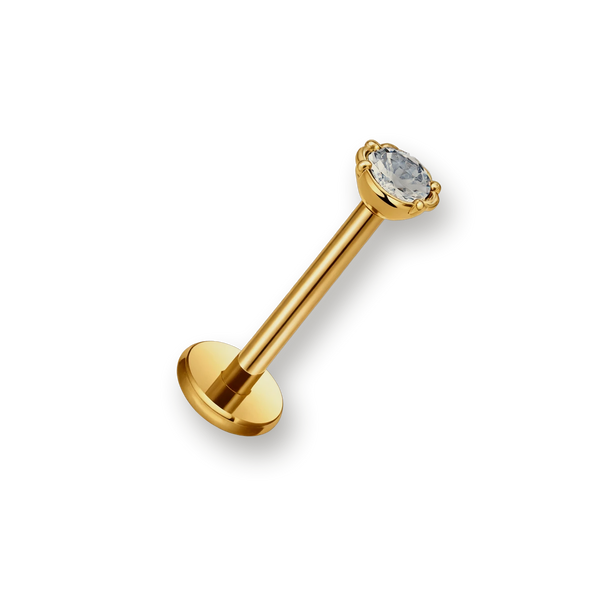
Gold Flat Back Labret
24,90€
-

Titanium Flat Back Labret
24,90€


What is a conch piercing?
The conch is the large, bowl-shaped cartilage in the centre of the ear — named after the conch shell it resembles. It is one of the most versatile ear piercings because it sits right in the middle of the ear, so it works equally well as a quiet central point or as the anchor for a bold, framed look. There are two placements:
- Inner conch — through the flat centre of the ear, worn with a flat-back stud. Subtle, and the perfect anchor for a curated ear.
- Outer conch — closer to the rim, often worn with a large hoop that wraps around the ear (an “orbital conch”). Bold and eye-catching.
Which jewellery suits the conch
The conch carries more jewellery than most ear spots, so the piece you choose changes the whole look:
- Flat-back labret studs — the most comfortable choice, especially while healing: the flat disc sits behind the ear so nothing digs in when you sleep.
- Large hoops & orbitals — once fully healed, a big ring frames the ear beautifully.
- Chains — link the conch to a helix or lobe for a connected, curated effect.
More on each style in our guide to the types of piercing jewellery.
Titanium, gold or steel for a conch
The conch is thick cartilage and heals slowly, so the material matters more than the design while it settles.
- Implant-grade titanium (ASTM F136, G23) — nickel-free and hypoallergenic, the safest choice for a fresh or reactive conch.
- Gold — warm and timeless once fully healed; our gold is a PVD gold finish over a G23 titanium base, so it stays hypoallergenic.
- Surgical steel — durable and affordable, but it can contain traces of nickel; keep it for a healed piercing.
Not sure which to pick? See which material for your piercing.
Conch gauges and sizes
Keep the gauge and length your piercer used — a conch is not a spot to downsize too soon.
- Gauge — most conch piercings are 16G (1.2 mm); some large hoops are worn at 14G (1.6 mm).
- Length — the bar has to clear the thickness of the cartilage, so a conch often takes a slightly longer post than a helix.
Everything explained in our gauge and size guide.
Healing and aftercare
A conch takes 3 to 9 months to heal — longer than a lobe because it is dense cartilage with less blood flow. To help it along:
- Clean twice a day with sterile saline and leave it otherwise untouched.
- Avoid sleeping on that side; a travel pillow with a hole in the middle takes the pressure off.
- Keep the flat-back stud in until fully healed — swapping to a hoop too early is the most common cause of irritation.
Swelling, spreading redness or discharge means it is time to see your piercer, not to remove the jewellery. Full routine in our aftercare and healing guide.
Styling the conch
A central conch is the anchor most curated ears are built around: a larger conch piece balances smaller studs on the helix, tragus and daith. Mix titanium and gold on purpose and add one piercing at a time. See how to build a curated ear.