— The collection
Helix Piercing
The outer rim of the upper ear — the most versatile cartilage piercing to stack.
The helix piercing sits on the upper cartilage of the ear. Visible and easy to style, on its own, as a double helix, or stacked in a curated ear, it has become one of the most popular piercings. At Aurea, every helix piece is crafted from certified, nickel-free material, for an ear that heals calmly and a style that is yours. Rings, studs, labrets and hoops: build your own, in titanium for safety or gold for shine. Pair it with a conch, tragus or rook to build out the ear.
-
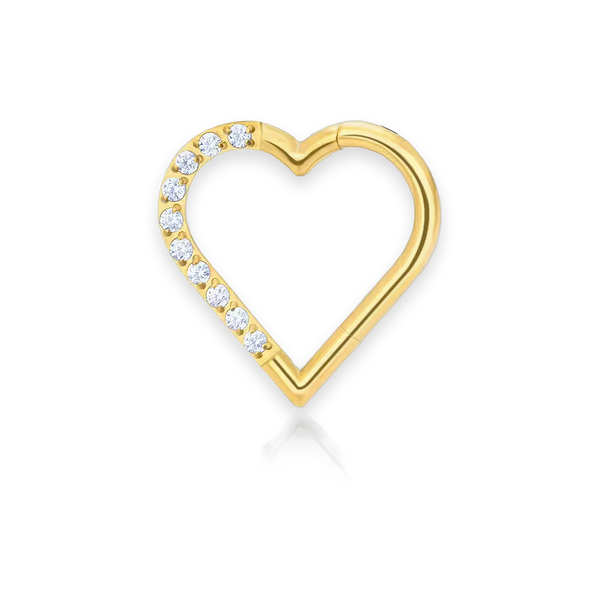
Gold Daith Heart Clicker
24,90€
-

Titanium Daith Heart Clicker
24,90€
-

Gold Pavé Seamless Ring
23,90€
-

Titanium Pavé Seamless Ring
23,90€
-

Gold Cartilage Hoop
22,90€
-

Titanium Cartilage Hoop
22,90€
-
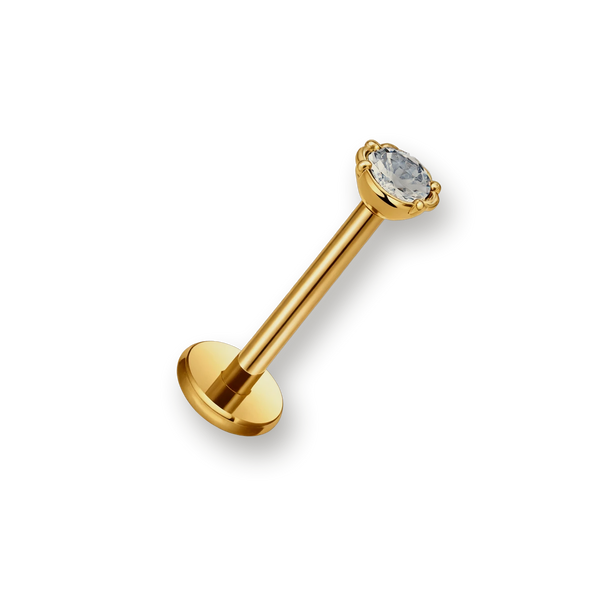
Gold Flat Back Labret
24,90€
-

Titanium Flat Back Labret
24,90€


Helix, forward helix and double helix
A helix piercing sits on the outer rim of cartilage around the upper ear. It is one of the most popular cartilage piercings precisely because it comes in so many variations, each with its own placement:
- Standard helix — anywhere along the upper outer rim, the classic starting point.
- Forward helix — the small ridge at the front, just above the tragus, often worn as a single, double or triple.
- Mid & high helix — the same rim, placed lower or higher to balance a stack.
- Double & triple helix — two or three holes close together, worn with matching studs for a clean row.
Because the helix is a flat section of rim, it takes almost every style of jewellery — which is why it anchors most curated ears.
Choosing helix jewellery: hoops, labrets and rings
The same hole looks completely different depending on the piece:
- Flat-back labret studs — a flat disc behind the ear and a decorative top in front. The most comfortable choice for a fresh helix and the easiest to sleep on.
- Hoops & seamless rings — the bold, everyday look; a snug ring hugs the rim, a larger hoop makes a statement.
- Clickers — hinged rings that open and close in one click, easy to change once healed.
Start with a flat-back stud while it heals, then add a hoop once settled. See our guide to the types of piercing jewellery.
Titanium, gold or steel for a helix
On fresh cartilage, the material matters more than the design.
- Implant-grade titanium (ASTM F136, G23) — nickel-free and hypoallergenic, the safest choice for a healing or reactive helix.
- Gold finish — warm and timeless once fully healed; our gold is a PVD gold layer over a G23 titanium base, so it stays nickel-free.
- Surgical steel — durable but can contain traces of nickel, better kept for a long-healed ear.
In doubt, heal in titanium and move to gold later — more in which material for your piercing.
How a helix piercing heals
Cartilage heals slowly: a helix usually takes 3 to 9 months, sometimes longer. During that time:
- Keep the first jewellery in until it is fully healed — changing it early sets healing back.
- Clean twice a day with sterile saline and leave it otherwise untouched; never twist it.
- A small firm bump beside the hole is common and usually from pressure or an early change, not infection.
Full routine in our aftercare and healing guide.
Does a helix piercing hurt?
Cartilage is firmer than the lobe, so a helix is a sharp pinch followed by a dull throb for a day or two — most people rate it a moderate 4–5 out of 10. A professional needle piercing is quicker and heals more cleanly than a piercing gun, which should never be used on cartilage.
Styling a helix in a curated ear
The helix is where most ear stacks begin. A few ideas:
- Line up a double or triple helix with matching studs for a tidy row.
- Mix a flat-back stud with a hoop on the same rim for contrast.
- Repeat titanium and gold deliberately so the mix reads as intentional.
See how to build a curated ear to plan yours.