— The guide
Piercing Gun vs Needle: What's the Difference?
How a piercing gun and a needle really differ: tissue trauma, sterility, jewellery, cartilage, pain and price, and what to do if you were pierced with a gun.

Jewellery counter or piercing studio? The piercing gun vs needle question usually comes up before a first ear piercing, a child's earlobes or a new cartilage spot. Both make a hole, and both can heal well, but they don't work the same way at all: one cuts a clean channel with a sterile blade-sharp tube, the other pushes a stud through the tissue by force. Here's what actually differs, why professional piercers almost all use a needle, and what to do if you were pierced with a gun years ago.
How a needle and a piercing gun actually work
The two methods have nothing in common except the result: a piece of jewellery through your skin.
The needle
A professional piercer uses a hollow, single-use needle, opened from its sterile packaging in front of you. Its bevelled tip is very sharp: it slices through the tissue and removes a tiny core, leaving a clean channel. The jewellery follows the needle straight into that channel, usually in one smooth movement. The piercer chooses the spot, the angle and the length of the jewellery for your anatomy.
The piercing gun
A piercing gun is a spring-loaded device. The earring itself does the piercing: its pointed but relatively blunt post is fired through the lobe in a fraction of a second, and a butterfly back is clipped on at the same time. Nothing is cut or removed; the tissue is pushed apart and compressed. Some newer systems use pre-sterilised disposable cartridges, which is an improvement, but the principle of forcing a stud through the skin stays the same.
Piercing gun vs needle: side by side
| Point | Needle | Piercing gun |
|---|---|---|
| How it pierces | Cuts a clean channel | Forces a stud through |
| Tissue trauma | Low | Higher (compression) |
| Sterilisation | Single-use, sterile | Plastic body, hard to autoclave |
| Jewellery | Chosen and sized for you | Standard stud, butterfly back |
| Cartilage | Yes, by a pro piercer | Not recommended |
| Who does it | Trained piercer | Often a shop assistant |
| Price | Higher | Usually lower |
Why tissue trauma matters for healing
A clean cut heals more predictably than a crushed one. When a stud is forced through, the edges of the hole are bruised and compressed, which can mean more swelling, more tenderness and a longer, bumpier healing period. That doesn't mean every gun piercing goes wrong — plenty of lobes heal without a problem — but the odds are less on your side.
- More initial swelling around a stud that has no room to spare.
- A higher chance of irritation bumps — see our guide to piercing bumps, keloids and granulomas.
- A rougher channel that can take longer to settle.
Sterility: the hard-to-clean part
In a professional studio, the needle is single-use and everything that touches the piercing is either disposable or sterilised in an autoclave (a steam steriliser). A reusable piercing gun is mostly plastic, and plastic can't go through an autoclave. It gets wiped down between customers, which cleans it but doesn't sterilise it. Disposable cartridge systems reduce this risk, but the device still sits against your skin, and the setting — often a busy shop counter — isn't a sterile field.
The jewellery problem
With a gun, you don't really choose your jewellery: you choose from whatever fits the gun. That causes three recurring issues:
- The metal. Gun studs are often plated or surgical steel rather than implant-grade materials, which can trigger reactions in sensitive or nickel-allergic skin. Our piercing materials guide explains the differences.
- The length. The post is a standard length, not adapted to your lobe, so it can press into the skin once swelling starts.
- The butterfly back. It's squeezed tight against the ear and traps hair, soap and debris in its folds.
Cartilage: why piercers say no to the gun
Cartilage is firm and has a poor blood supply, so it handles blunt force badly and heals slowly. Forcing a stud through it can damage the tissue around the hole and lead to long, difficult healing. That's why the Association of Professional Piercers (APP) publicly advises against using piercing guns on cartilage, and why reputable studios only pierce the helix, tragus or conch with a needle. If a shop offers to gun your upper ear, it's a good reason to walk away.
Pain, speed and price
The gun's selling point is speed: click, done. But a skilled piercer with a needle is very quick too — the piercing itself takes a moment — and many people find a sharp needle feels cleaner than the dull, pinching pressure of a gun. Pain is personal, so it's hard to promise more than that. On price, a gun piercing is usually cheaper, sometimes even included with the earrings. A needle piercing costs more because you're paying for a trained piercer, sterile single-use tools and quality jewellery. Our guide on how much a piercing costs breaks down what's included.
Children and earlobes
Earlobes are soft, fleshy and the most forgiving spot on the body, which is why gun piercing is mostly done there, often on children. Many professional studios also pierce children's lobes with a needle, each with its own minimum age and conditions. Whatever the method, a few things matter more than speed: the child should want the piercing, the jewellery should be a hypoallergenic metal, and the moment should stay calm — some studios even pierce both ears at once with two piercers. If you're unsure, ask a local studio about its policy — they'll usually explain how they work.
How to recognise a good piercer
- The studio uses an autoclave and can tell you how it checks its sterilisation.
- The needle and jewellery are opened from sterile packaging in front of you.
- The piercer wears gloves, marks the spot and checks it with you before piercing.
- The jewellery is implant-grade titanium or an equivalent material, sized for your anatomy.
- You leave with clear aftercare instructions and an offer to downsize the bar once swelling goes down.
Already pierced with a gun? What to do now
No need to panic: most gun-pierced lobes heal and live a perfectly normal life. A few simple steps help:
- Let it heal first. Keep cleaning it with sterile saline and leave it alone — our aftercare and healing guide has the routine.
- Watch how it reacts. Persistent itching, redness or weeping can point to the metal or a back that's too tight.
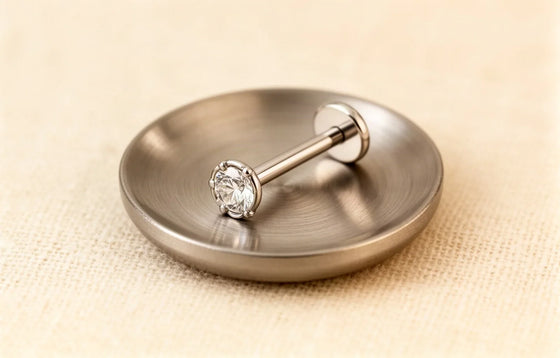
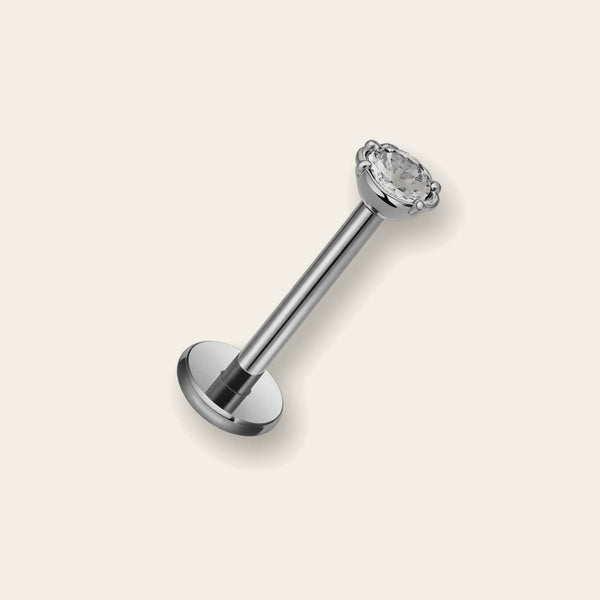
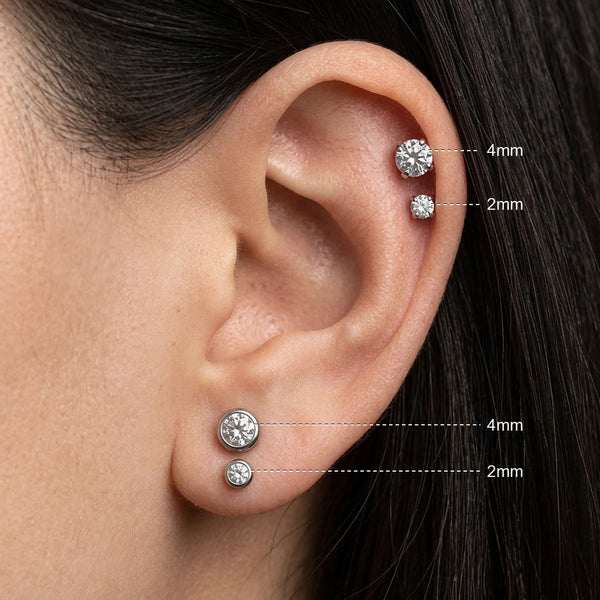
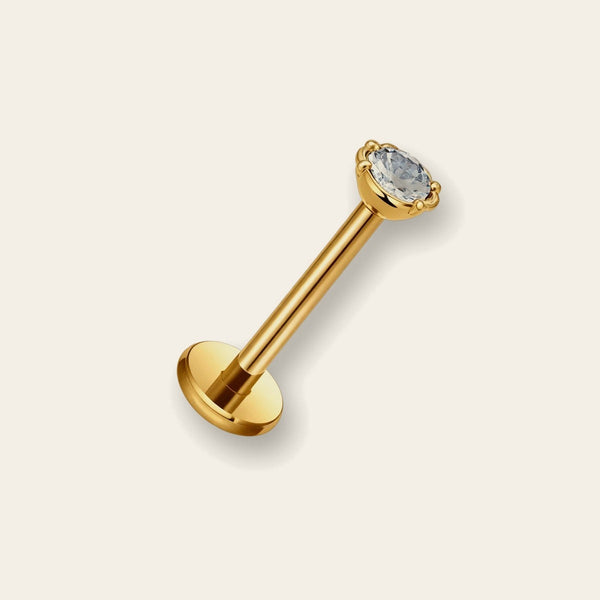
- Switch once healed. Swap the gun stud for a well-fitted titanium piece, such as a flat-back titanium labret: no butterfly to trap debris, and a post length suited to your lobe.
- Ask a piercer if in doubt. If the hole is crooked, sore or slow to heal, a professional can check it and fit the right jewellery.
Frequently asked questions
Is a needle or a gun better for an ear piercing?
For most people, a needle. It cuts a clean channel instead of forcing a stud through, uses single-use sterile tools, and lets the piercer choose jewellery sized for you. A gun can work on earlobes, but it's the less controlled option.
Does a needle hurt more than a piercing gun?
Not necessarily. Both are over in a moment, and many people find a sharp needle feels quicker and cleaner than the blunt pressure of a gun. Everyone's pain tolerance is different, so experiences vary.
Can you pierce cartilage with a gun?
It's strongly discouraged. Cartilage reacts badly to blunt force, and the Association of Professional Piercers advises against guns on cartilage. Have your helix, tragus or conch done with a needle by a professional piercer.
Why are piercing guns still used?
They're fast, cheap and easy to use without long training, which suits jewellery counters and pharmacies. That convenience is the main reason, not a better result for your ear.
When can I change the stud from a gun piercing?
Once the piercing is fully healed and no longer tender. Then you can switch to titanium ear jewellery with a flat back and a length that fits your lobe. If it reacts before that, ask a piercer rather than changing it yourself.
— Shop this guide


A gun and a needle both make a hole, but only one is designed for your body. For a new piercing, choose a professional studio and a sterile needle; if you already have a gun piercing, let it heal, then give it a jewel in a metal your skin tolerates.