— The guide
Piercing Meanings: What Each Placement Symbolises
What does a tongue, conch, tragus or daith piercing mean? Origins, symbols and myths, placement by placement.

A piercing is first of all a style choice. But behind every placement there is also a story, symbols inherited from very old cultures, and a few myths. Here is what each piercing means, placement by placement, separating what comes from tradition from what is just legend.
Ear piercing meaning and symbolism
Ear piercing is one of the oldest forms of human adornment. Ötzi, the iceman found in the Alps and around 5,300 years old, already had pierced earlobes. Depending on the era, an ear piercing has marked coming of age, social status or belonging to a group. Sailors, the story goes, wore a gold earring to pay for their funeral if they died far from home.
On the spiritual side, many traditions see the ear as a doorway: piercing it and wearing metal there would symbolically protect against what "comes in" through it. Today, an ear piercing is mostly a way to express yourself, and the curated ear has turned it into a real styling playground.
Conch piercing meaning
The conch is named after the large spiral shell that the hollow of the ear resembles. The conch shell is a strong symbol in several cultures, especially in India and in Buddhism, where it is linked to sound, listening and truthful speech. A conch piercing is therefore often read as a nod to listening, inner life and harmony. Visually, it is a bold yet elegant spot at the centre of the ear. See our conch piercing jewellery.
Tragus piercing meaning
The tragus is the small flap of cartilage that guards the entrance of the ear canal. Its symbolism comes from that position: it is often linked to protection and discretion, since it stands at the door of the ear. Some also see it as a point of listening to yourself. In practice, it is above all a refined, delicate piercing that shows off a small sparkling stud. Discover our tragus piercing jewellery.
Daith piercing meaning
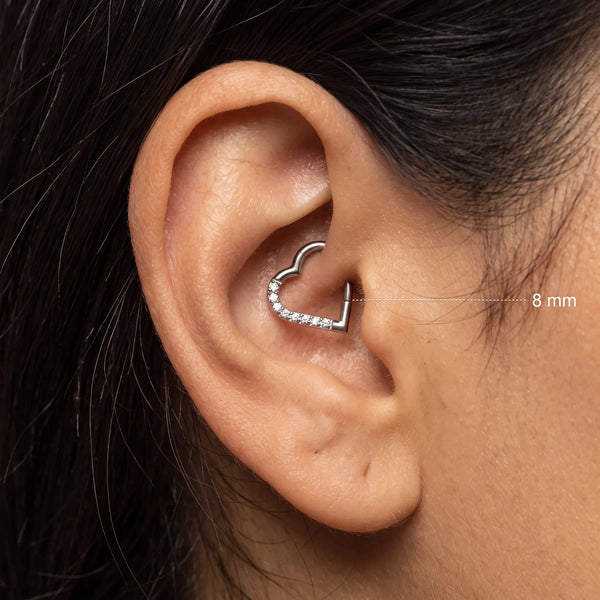
The daith goes through the innermost fold of cartilage in the ear. Its name is said to come from the Hebrew da'at, "knowledge". It was popularised in the 1990s and is often given a meaning of introspection and wisdom.
It is also famous for a myth: it would relieve migraines by acting like an acupuncture point. No serious study shows this. If you get one, get it for the jewellery, not as a treatment. See our daith piercing jewellery.
Rook piercing meaning
The rook sits on the ridge of cartilage just above the daith. Also popularised in the early 1990s, it has no precise historical symbolism. It is mostly associated with originality and patience, since it is a technical spot with a long heal. Wearing one often shows a taste for details you only notice up close. See our rook curved barbells.
Industrial piercing meaning
The industrial links two cartilage points with a single bar. It was born in the punk and alternative scenes of the late 20th century, hence its image of boldness, independence and a slightly rebellious spirit. It is one of the most "graphic" piercings: it structures the ear and gets noticed instantly. See our industrial barbells.
Tongue piercing meaning
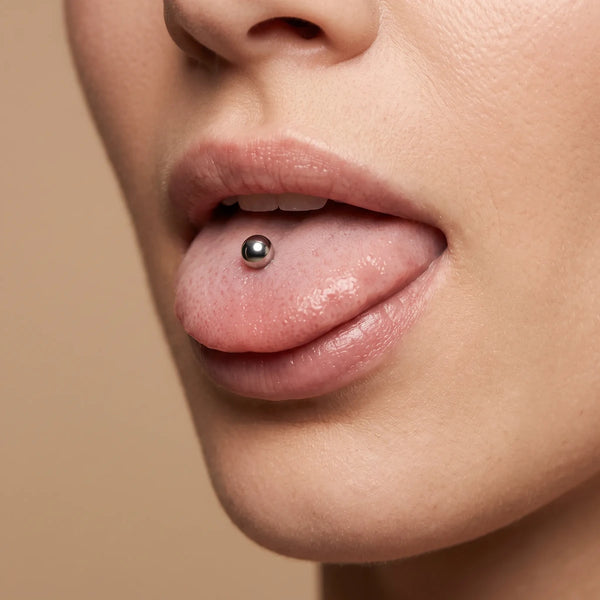
It is one of the most asked questions: what does a tongue piercing mean? Historically, some Central American civilisations such as the Maya and the Aztecs pierced the tongue during rituals, to connect with the sacred. In modern culture, it spread in the 1990s with an image of freedom, non-conformity and sometimes sensuality.
For women and men alike, it carries no hidden "message": it is a discreet piercing (invisible with your mouth closed) that people mostly choose for themselves. See our tongue barbells.
Septum piercing meaning
The septum goes through the wall between the nostrils. It is one of the piercings with the oldest and most widespread roots: it is found among peoples of the Americas, Africa, Asia and among Aboriginal Australians, where it could mark courage, status or coming of age. In modern culture, it is linked to strength and self-assertion. Its practical perk: a horseshoe flips up and hides in one move. See our septum jewellery.
Nose piercing meaning
Nostril piercing is very old in India and the Middle East. In India, the nath (nose ring) is traditionally tied to marriage and femininity, and Ayurvedic medicine credits it with benefits that nothing proves scientifically. In the West, it became popular from the 1960s–70s, carrying a free, travelling spirit. Today, it is above all one of the easiest piercings to wear every day. See our nose piercing jewellery.
Belly button piercing meaning
You will often read that navel piercing was reserved for the royalty of ancient Egypt. It is a widely repeated story, but without solid historical evidence. Its real popularity dates from the 1990s, driven by fashion and pop culture. It is associated with self-confidence, femininity and a sunny, summery style. See our belly button jewellery.
Choosing a piercing for what it means… and for what it takes
If a placement speaks to you for its symbol, that is a great reason to choose it. Just keep in mind what it involves day to day: the pain (see which piercings hurt the most), the healing time and above all the jewellery. For a fresh piercing, nickel-free ASTM F136 (G23) titanium is the safest choice to heal calmly.
Frequently asked questions
Which piercing has a spiritual meaning?
The most symbol-rich are the ear piercing (protection, rites of passage), the septum (courage and status for many peoples), the conch (the shell, a symbol of listening) and the daith (knowledge, introspection). But the spiritual side remains personal above all.
What does a tongue piercing mean on a woman?
Nothing different from a man. It is often linked to freedom and non-conformity, but it is mostly a personal, discreet choice. The clichés around it say nothing about the person wearing it.
Does a daith piercing cure migraines?
No, nothing proves it. Some people report an improvement, but no serious study confirms any effect. For migraines, see a doctor.
Does a piercing have to mean something?
Not at all. Most piercings are chosen for how they look, to build an ear or simply because you love them. The only meaning that matters is the one you give it.
— Shop this guide

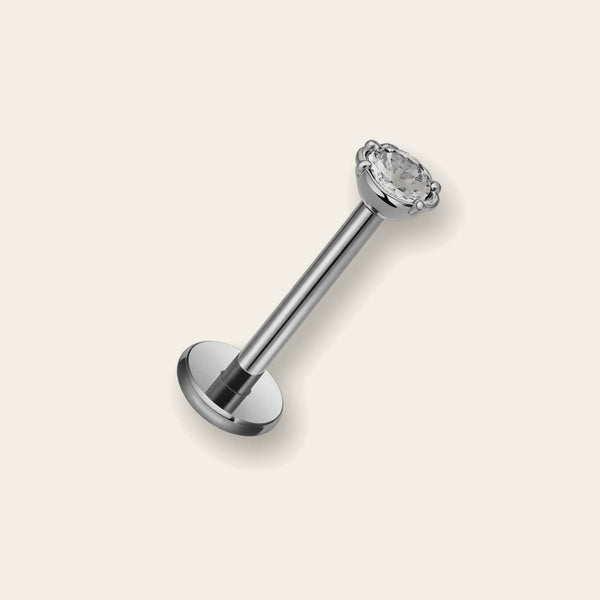
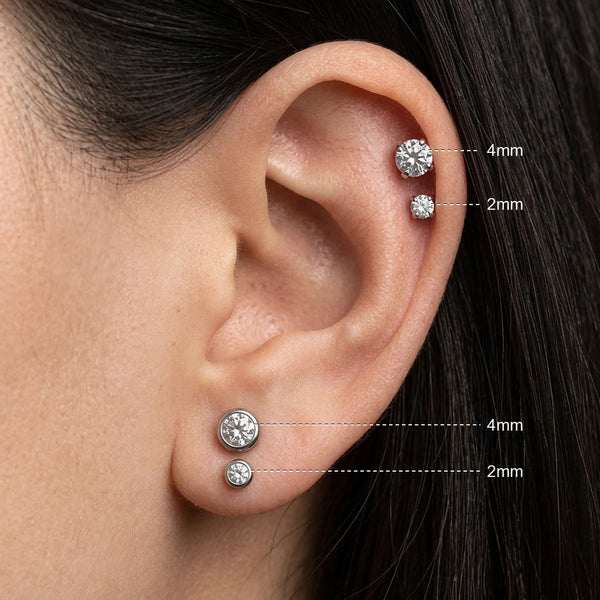

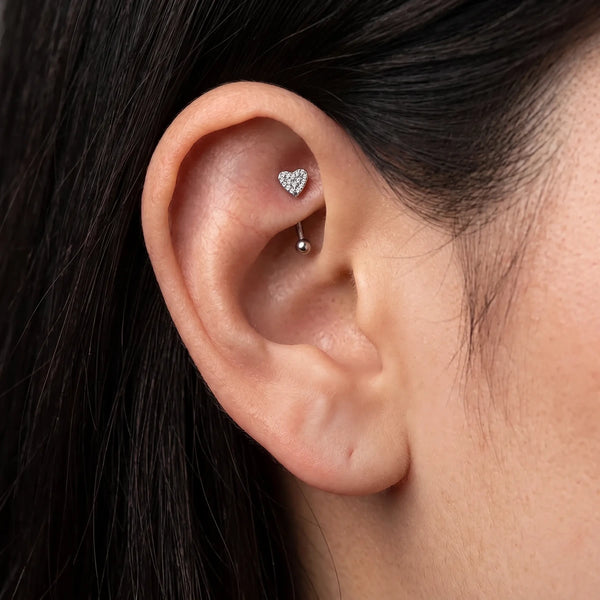


An inherited symbol, a personal nod or a simple crush: every piercing tells a story. It is up to you to choose the one you want to wear.