
— The guide
Implant Grade Titanium: What ASTM F136 and G23 Really Mean
What implant grade titanium really is: ASTM F136, G23, F67, hypoallergenic claims, PVD gold and how titanium compares to surgical steel.

Implant grade titanium is the phrase you'll see on almost every serious piercing jewellery listing, often next to "ASTM F136" or "G23". It sounds technical, and it is: it refers to a specific titanium alloy made to a published standard for surgical implants. Knowing what those letters and numbers actually mean helps you tell real implant-grade titanium from a vague "titanium" label. Here's what the standard covers, why piercers like this metal for fresh piercings, what "hypoallergenic" honestly means, and how to check a claim before you buy.
What does "implant grade titanium" actually mean?
"Implant grade" isn't a marketing word on its own: it points to titanium made and tested to a standard written for medical implants. In piercing, two ASTM standards come up, and one of them covers almost all titanium body jewellery.
ASTM F136: the Ti-6Al-4V ELI alloy
ASTM F136 is the specification for wrought Ti-6Al-4V ELI titanium alloy for surgical implant applications. In plain words: titanium alloyed with about 6% aluminium and 4% vanadium, with strict limits on impurities. The standard sets the chemical composition, the mechanical properties and how the material must be produced and tested. When a piece of jewellery is described as ASTM F136, it means the metal it's made from meets that implant specification — not simply that it "contains titanium".
G23 vs grade 5: what "ELI" changes
Titanium also has a grade system. Ti-6Al-4V in its ordinary version is grade 5, a common alloy in aerospace and industry. Its ELI version, for "Extra Low Interstitials", is grade 23, which is where the name G23 comes from. ELI means tighter limits on elements such as oxygen, nitrogen, carbon and iron, which gives the alloy better ductility and toughness. In piercing, "G23 titanium" and "F136 titanium" are often used as if they were the same thing. Strictly speaking, F136 is the implant specification, so it's the more precise name to look for.
ASTM F67: unalloyed implant titanium
ASTM F67 covers unalloyed titanium (commercially pure, grades 1 to 4) for surgical implants. It's softer than F136 and less common in body jewellery, but it's also an implant standard. Professional bodies such as the Association of Professional Piercers list both F136 and F67 titanium among the materials suitable for a new piercing.
Why titanium suits a fresh piercing
A new piercing is a healing wound with jewellery sitting inside it for weeks or months, so the metal matters. Implant-grade titanium ticks the boxes piercers care about:
- No nickel in the alloy. Nickel is the most common cause of jewellery reactions, and it isn't one of the elements of Ti-6Al-4V ELI.
- A self-protecting surface. Titanium instantly forms a thin, stable oxide film when it meets air. That film is why it resists corrosion so well, including in sweat and saline.
- Light but strong. Titanium is roughly half as dense as steel, so a stud or ring feels lighter and pulls less on healing tissue.
- A finish that can be polished smooth. A mirror-polished surface has fewer scratches and ridges for debris to cling to — a quality piercers check closely.
That's why most piercers start a new piercing in implant-grade titanium jewellery, usually a simple stud or flat-back labret, and leave decorative changes for later.
Is titanium hypoallergenic?
Honestly: no metal is guaranteed to suit every single person, and "hypoallergenic" isn't a regulated promise. It only means "less likely to cause a reaction". What makes implant-grade titanium the standard choice for sensitive skin is that it doesn't contain nickel and stays stable in the body, which is exactly why the same alloy is used for surgical implants.
True titanium allergy is considered rare, but it isn't impossible. If a piercing in titanium stays red, itchy or weepy despite good care, the cause is far more often pressure, movement or the jewellery size than the metal itself — but it's worth having a piercer or doctor look at it rather than guessing.
Titanium vs surgical steel, gold and plated metals
Our piercing materials guide gives the big picture. Here's the quick technical view, with titanium at the centre:
| Point | Titanium ASTM F136 | Surgical steel 316L | Solid gold | Gold-plated |
|---|---|---|---|---|
| What it is | Ti-6Al-4V ELI implant alloy | Stainless steel alloy | Gold alloyed with other metals | Thin gold layer over a base metal |
| Nickel | Not part of the alloy | Contains nickel | Depends on the alloy | Depends on the base metal |
| Weight | Light | Heavier | Heaviest | Depends on the base |
| Fresh piercing | The usual first choice | Not our pick | Only 14k+, nickel-free | No: the layer wears |
| Colours | Grey, anodised, PVD gold | Silver | Yellow, white, rose | Any |
The short version of titanium vs surgical steel: 316L steel is strong and affordable, but it contains nickel in its alloy, which can be enough to bother sensitive skin. Solid gold can work for some piercings when it's 14k or higher and nickel-free, but it's heavy and soft, and some white golds contain nickel. Plated jewellery is a thin layer over another metal; once it wears, your skin is in contact with whatever is underneath.
Anodised colours and PVD gold: what's on the surface
Titanium doesn't have to be grey. Two very different techniques change its colour.
Anodised titanium
Anodising uses an electric current to thicken titanium's own oxide film. Depending on the thickness, light reflects differently and you see bronze, blue, purple or green — with no dye, paint or added metal. The colour can fade with friction, and the piece underneath is still the same titanium.
PVD gold over titanium
PVD (physical vapour deposition) bonds a very thin coloured layer to the metal inside a vacuum chamber. At Aurea, gold pieces are exactly that: a gold-tone PVD finish on G23 titanium. It's not solid gold, and it isn't gold-plated brass. You get a warm colour with a titanium core, which is why gold-tone titanium jewellery is a popular choice once a piercing has healed. Like any surface finish, it can wear over time in spots that rub a lot.
How to check an implant-grade titanium claim
Anyone can write "titanium" on a product page. A few checks separate a real claim from a vague one:
- Look for the standard by name. "ASTM F136" (or "ASTM F67") is a specific claim. "Titanium" alone, or "medical titanium", says much less.
- Ask for the mill certificate. Titanium for implants comes with a material certificate from the mill that traces the batch to the standard. Serious suppliers and studios know where their metal comes from.
- Be wary of vague words. "Surgical steel" covers several alloys, "titanium plated" means a coating over another metal, and "titanium steel" is usually stainless steel.
- Check the finish. Good jewellery is smooth and evenly polished, with no burrs, scratches or rough threads.
- Ask your piercer. A professional can tell you what they use for new piercings and why.
Titanium doesn't fix everything
Wearing titanium removes one common trigger, nickel, but a piercing can still get angry for other reasons: sleeping on it, snagging, a bar that's too short or too long, or over-cleaning. If yours is sore, our guide to an irritated piercing walks through the usual causes, and our guide to piercing bumps helps you tell a granuloma from a keloid. Often the fix is a well-fitted titanium flat-back labret, sized by a piercer, and some patience.
Frequently asked questions
Is G23 titanium the same as ASTM F136?
They describe the same alloy, Ti-6Al-4V ELI. G23 is its grade name; ASTM F136 is the specification for using it in surgical implants. In piercing, both names are used for implant-grade titanium, but F136 is the more precise one.
Is titanium better than surgical steel for piercings?
For a fresh piercing or sensitive skin, titanium is usually the better choice: it's lighter and nickel isn't part of the alloy. Surgical steel can be fine in a long-healed piercing on skin that tolerates it well.
Can you be allergic to titanium?
It's considered rare, but no metal is guaranteed for everyone. If you have a history of metal allergies, talk to a doctor; a dermatologist can run patch tests if needed.
Does PVD gold on titanium wear off?
It's a thin surface layer, so it can wear with time in places that rub. The titanium underneath stays the same. When you swap jewellery, wait until the piercing has healed — our guide on changing a piercing explains when and how.
Why does titanium look darker than steel?
Polished titanium has a slightly warmer, greyer shine than steel. It's a natural property of the metal, not a sign of poor quality.
— Shop this guide
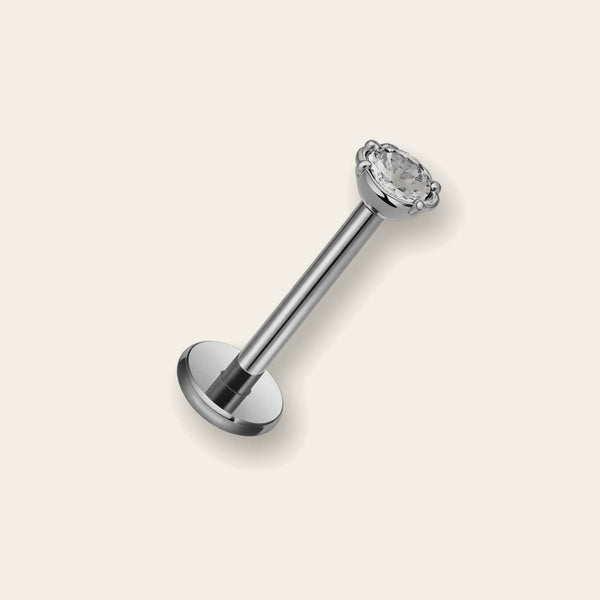
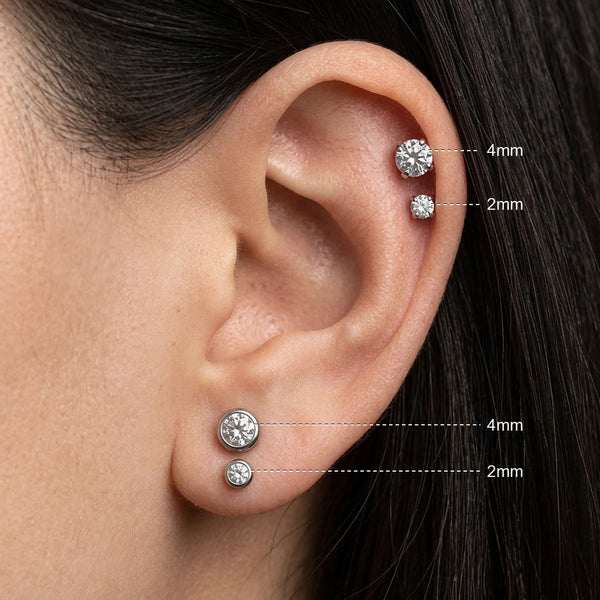
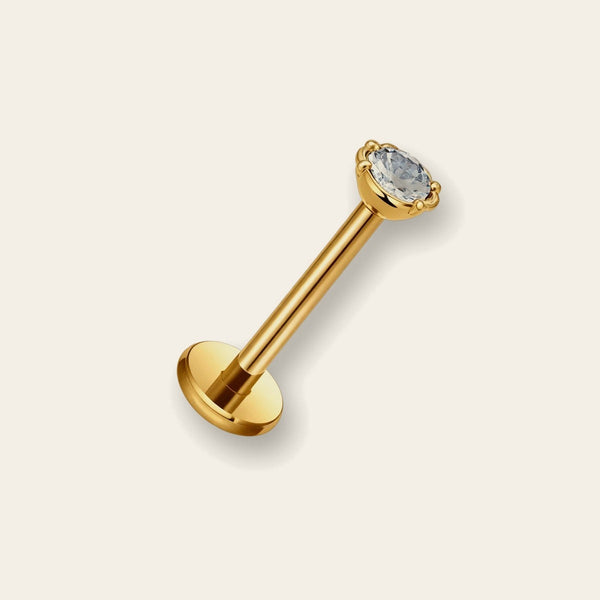
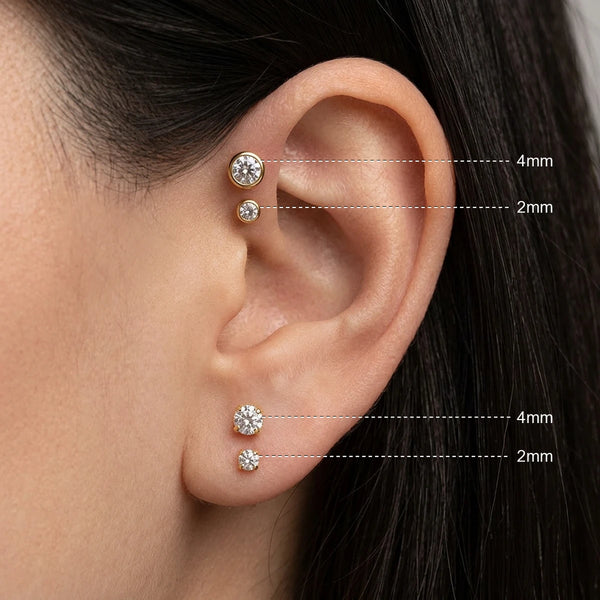

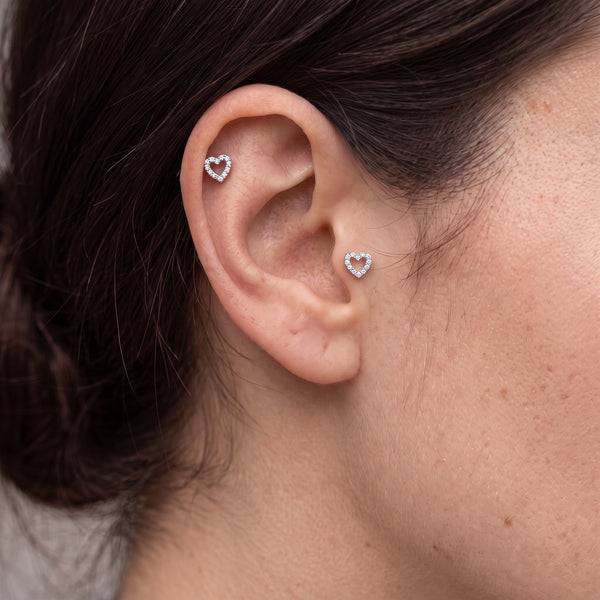


Implant-grade titanium isn't magic, but it's the most reliable starting point for a new piercing: a known standard, no nickel in the alloy, and a smooth, stable surface. Look for ASTM F136 by name, ask questions when a label is vague, and let your piercing heal in a metal your skin tolerates.


