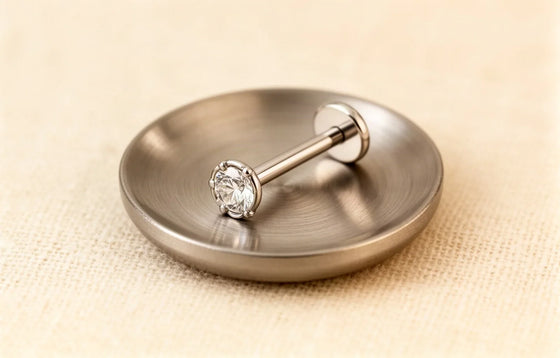
— The guide
Types of Nose Piercings: Every Placement Explained
Types of nose piercings on one diagram: nostril, high nostril, septum, bridge, rhino and nasallang, with pain, healing and jewellery.

The main types of nose piercings are the nostril, the high nostril, the septum, the bridge, and a few rarer placements such as the rhino and the nasallang. They don't just look different: they feel, heal and wear differently too. A classic nostril stud and a vertical rhino through the tip of the nose have very little in common beyond being on your face. This guide maps every placement on one simple diagram, compares them in a single table, then goes through each one so you can pick the nose piercing that suits your face, your anatomy and your daily life.
If you're comparing nose piercing types for a first piercing, here's the short version: the nostril is the classic, versatile starting point, the septum heals quickly and is easy to hide, and the unusual placements are best kept for later, with a piercer who has done them many times.
Types of nose piercings at a glance
Each number on the diagram matches a placement below. Double or stacked nostrils and the austin bar aren't drawn, since they're variations on the same areas.
The table gives the typical picture for each one. Pain is personal and healing varies from person to person, so treat these as rough guides rather than promises. Pain levels follow our guide to which piercings hurt the most, and healing times follow our piercing healing time chart.
| Placement | Where | Typical pain | Typical healing | Usual jewellery |
|---|---|---|---|---|
| Nostril | Side of the nostril, in the crease | Low, about 3/10 | 4 to 6 months | Stud, L-bend, nose screw; seamless ring or clicker once healed |
| High nostril | Higher up the side of the nose | Moderate, more pressure than a nostril | Often longer than a nostril | Small flat-back stud |
| Septum | Sweet spot between the nostrils | Medium, about 5/10, very brief | 6 to 8 weeks | Clicker, horseshoe, seamless ring |
| Bridge | Skin between the eyes | A firm pinch, skin only | Several months | Straight or curved barbell |
| Rhino | Vertically through the tip | Among the more intense | Long, often longer than a nostril | Curved barbell |
| Nasallang | Nostril, septum and nostril in one bar | Among the more intense | Long, often longer than a nostril | Straight barbell |
Nostril piercing: which side should you choose?
The nostril piercing goes through the thin cartilage on the side of the nose, usually in the natural crease where the nostril curves. It's the most common nose piercing by far, and for good reason: it's quick, it suits almost every face, and once healed it can wear anything from a tiny stud to a fine hoop. Most people describe a sharp sting that makes the eyes water, and then it's over. Healing typically takes 4 to 6 months, and a nostril often feels fine long before it has truly settled inside.
As for the nose piercing which side question, there's no wrong answer. In some traditions, particularly in South Asia, the left side is customary. Otherwise most people choose by look: the side they part their hair on, the side they feel is their best in photos, or the side they don't sleep on. Put a dot of eyeliner on each side, or ask your piercer to mark both, and see which one you prefer in the mirror.
Once you have one, it's easy to build on. A double or stacked nostril adds a second piercing on the same side, just above or slightly behind the first, and some people choose one on each side for a symmetrical look. Your piercer will check there's enough room on your nostril before adding another.
High nostril piercing
A high nostril piercing sits further up the side of the nose, above the crease, where the cartilage is firmer and the inside of the nose is narrower. It's a delicate, modern placement that pairs beautifully with a regular nostril. It's also more demanding: there's more pressure when it's pierced, swelling can be more noticeable, and healing is often longer than for a standard nostril.
- Studs only. A hoop won't sit properly that high, so it's worn with a small flat-back stud.
- Anatomy matters. The back of the jewellery needs room inside the nose, so a piercer will look inside before agreeing to the spot.
- Go easy on it. Blowing your nose hard or sleeping on that side can keep it irritated for months.
Septum piercing
Done well, a septum piercing doesn't go through cartilage at all. It passes through the thin strip of softer tissue just in front of the cartilage, at the bottom of the wall between the nostrils, which piercers call the sweet spot. That's why it's easier than people expect: intense for a split second, often followed by an urge to sneeze, and healing in around 6 to 8 weeks.
It's also the most discreet of the visible nose piercings, because a clicker or a horseshoe can be flipped up inside the nose once healed. Avoid flipping it while it's fresh, though, as the movement keeps irritating the channel. Not everyone has a well-defined sweet spot, and a deviated septum can change where it sits, so a good piercer will check first. You can browse septum piercing jewellery to see the shapes most people choose.
Bridge piercing
A bridge piercing goes horizontally through the skin at the top of the nose, between the eyes. It doesn't touch bone or cartilage: it's a surface piercing through a pinch of skin, so it feels more like a firm pinch than a deep crunch. It's a bold, graphic look, usually worn with a short straight or curved barbell with a ball at each end.
Because it sits on a fairly flat surface, a bridge is more prone to migration than a nostril, and it's one of the placements covered in our guide to piercing rejection. Healing usually takes several months. How much skin you can pinch there decides whether it works for you, and if you wear glasses, the frame may press on the jewellery. Bring your glasses so your piercer can judge the position.
Rarer nose piercing types: rhino, nasallang and austin bar
These three are advanced placements. They're less common, they depend heavily on your anatomy, and they should only be done by a piercer with real experience of them. Ask to see healed examples of their work before you book.
- Rhino (vertical tip). A curved barbell enters near the tip of the nose and comes out underneath, just in front of the septum. It passes through thick tissue at the tip, so it's among the more intense nose piercings, and healing is long.
- Nasallang. A single straight barbell crosses the whole nose in one go: through one nostril, the septum and the other nostril. From the front it looks like two nostril studs. It's demanding to pierce and to heal, and only some noses have the right shape for it.
- Austin bar. A straight barbell runs horizontally through the tip of the nose without passing through the nostrils or the septum. It needs a fairly broad tip and, like the others, an experienced piercer.
If you love the look but your anatomy doesn't suit it, a good piercer will tell you. That honesty is worth more than any design.
Choosing jewellery for each nose piercing
The right jewellery depends on the placement, and your first piece is always chosen by your piercer to allow for swelling and healing. Our guide to the types of piercing jewellery explains each shape in detail.
- Nostril: a flat-back stud, an L-bend or a nose screw to start; a seamless ring or a clicker once fully healed.
- High nostril: a small flat-back stud, for good.
- Septum: a clicker, a horseshoe or a seamless ring.
- Bridge: a short straight or curved barbell.
- Rhino: a curved barbell; nasallang and austin bar: a straight barbell.
For nostrils, many people start with a flat-back stud such as our titanium nose stud, because it moves less than a hoop while the piercing heals. Whatever you choose, implant-grade titanium is a sensible material for a fresh nose piercing. When it's time to swap, our guide on how to put in a nose ring walks you through every closure.
How to choose a nose piercing
Beyond looks alone, a few practical points help you pick the right one:
- Your face. A nostril stud is subtle and works with almost any face; a septum frames the centre; a bridge draws the eye to the top of the face. Try a small sticker or a dot of eyeliner on each spot and take a photo.
- Your anatomy. The shape of your nostrils, the space inside your nose, the septum's sweet spot and the skin at the bridge all decide what's possible. Only a piercer looking at your nose can confirm it.
- Your lifestyle. If you need to hide it at work or school, a flipped-up septum is the easiest. Contact sports, masks and frequent nose-blowing are harder on nostrils and on the tip.
- Glasses. Frames can rest on a bridge piercing, and some styles sit close to a high nostril. Bring your glasses to the appointment.
- Patience. A nostril or a septum makes a great first nose piercing. Keep the rarer placements for when you know how your skin heals.
Frequently asked questions
What is the most common nose piercing?
The nostril, by a wide margin. It's quick, heals in a few months, suits most faces and can wear both studs and rings. It's also the usual starting point before adding a high or double nostril. You can see the shapes it takes in nose piercing jewellery.
Which nose piercing hurts the least?
For most people, the nostril: a sharp sting, around 3 out of 10, and over fast. The septum is more intense for a split second but very brief. Placements through firmer cartilage or thicker tissue, such as the high nostril, the rhino and the nasallang, tend to feel stronger.
Which nose piercing heals the fastest?
The septum, when it's pierced through the soft sweet spot: around 6 to 8 weeks. A nostril typically takes 4 to 6 months, and the higher and rarer placements usually take longer.
Can I get a nose piercing if I wear glasses?
Yes. Glasses rarely bother a nostril or a septum. The bridge is the one to think about, since the frame can rest on or near the jewellery. Show your piercer your glasses so they can place it well, or choose another spot.
— Shop this guide

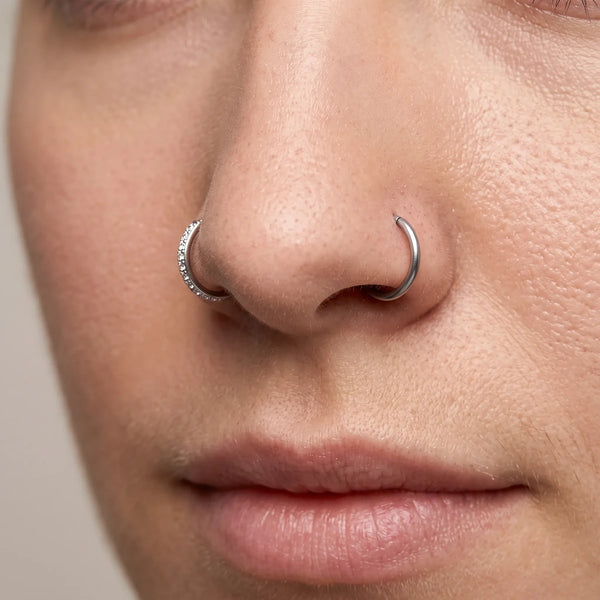

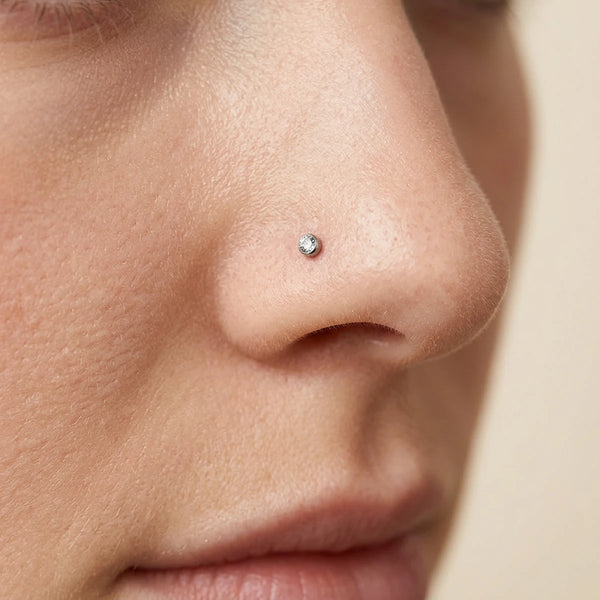


Most people start with a nostril or a septum and build from there. Whatever placement you're drawn to, choose an experienced piercer, start with a well-fitted, body-friendly metal and give it all the time it needs to heal.