— The guide
Irritated Piercing: Crusties, Swelling, Bleeding and What to Do
How to tell normal healing from an irritated or infected piercing, what causes crusties, swelling and bleeding, and how to calm it down.

An irritated piercing can catch you off guard: it was doing fine, and now it's red, puffy, crusty or bleeding a little when you touch it. It's one of the most common hiccups of healing, and most of the time it isn't an infection: it's your skin reacting to something that keeps bothering it. Here's how to tell normal healing from irritation and from infection, what usually causes it, and how to calm it down.
What's normal while a piercing heals
A fresh piercing is a small wound, and for the first weeks a few things are completely expected:
- Some redness and swelling around the hole, strongest in the first days, then slowly settling.
- Tenderness when you touch or knock it.
- Crusties: dried, whitish-yellow lymph that collects around the jewellery. That's normal healing fluid, not pus.
- A little bleeding in the first days, or a spot of blood after a knock.
- Itching as the skin rebuilds itself.
Healing isn't a straight line either. Cartilage, navel and surface piercings take months, and it's common for a piercing to look settled, then flare up for a few days before calming down again. Our piercing aftercare and healing guide covers what to expect, phase by phase.
Signs of an irritated piercing
Irritation is when those normal reactions come back or get worse instead of fading, usually because something keeps aggravating the area:
- Redness and swelling that return after the piercing had calmed down, like a swollen ear piercing the morning after you slept on it.
- A crusty piercing that produces far more crust than usual, day after day.
- Bleeding when the jewellery gets caught, or a hole that looks raw.
- A small red or pink bubble right next to the hole: the irritated piercing bump, also called a granuloma. Our guide to piercing bumps, keloids and granulomas explains how to tell it apart from a keloid.
- Jewellery that suddenly feels tight, or discs and balls that sink into the skin.
Irritated or infected? How to tell the difference
The two can look alike at first, but an infection usually looks and feels more intense, and it keeps getting worse. A quick comparison:
| Sign | Normal healing | Irritation | Possible infection |
|---|---|---|---|
| Redness | Around the hole, fading | Comes back, stays local | Spreads, gets darker |
| Swelling | Early on, then settling | Flares after a knock or pressure | Worse day after day |
| Fluid | Clear to whitish, dries into crusties | More crusties, sometimes a little blood | Thick yellow, green or smelly pus |
| Heat and pain | Mild tenderness | Sore when touched | Hot, throbbing, worsening |
| Overall | Better week by week | Ups and downs | Sometimes fever or feeling unwell |
If yours sounds more like the last column, read our full guide to an infected piercing and see a doctor. Don't take the jewellery out on your own in that case: it can trap the infection inside. When in doubt, it's always fine to ask: a piercer or a doctor can usually tell the difference quickly just by looking.
What irritates a piercing?
Irritation almost always has a trigger. Finding it is most of the cure:
- Snagging and knocks. Hair, towels, scarves, tops pulled over your head, a hairbrush. One hard snag can set a healing piercing back.
- Sleeping on it. Pressure all night long is a classic cause of swelling, especially on cartilage.
- Fiddling. Twisting, turning or touching the jewellery with unwashed hands disturbs the healing tissue.
- The wrong metal. Nickel and low-grade alloys can cause reactions that look just like irritation. Implant-grade titanium is a common choice for sensitive skin, and our piercing materials guide compares the options.
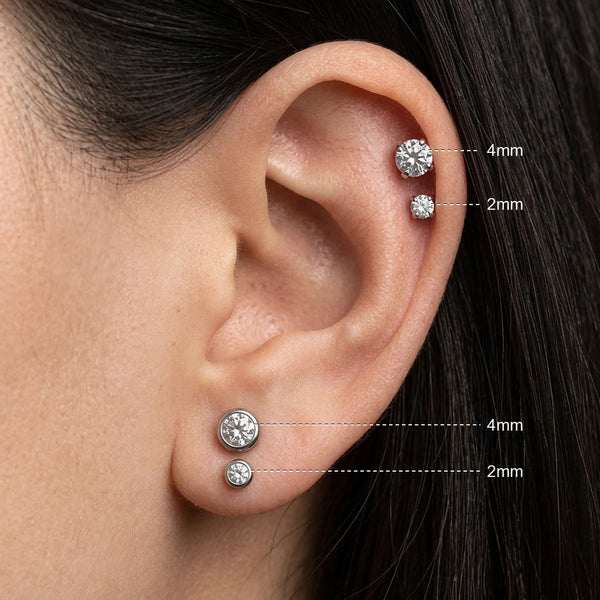
- The wrong length. A bar that's too short presses into swollen tissue; one that's too long once the swelling has gone down moves and catches. See our piercing gauge and size guide.
- Harsh products. Alcohol, hydrogen peroxide, antibacterial soaps, ointments and tea tree oil, or simply cleaning too often, dry out and inflame new skin.
- Make-up, hair products and sweat sitting on the piercing for hours.
- Changing the jewellery too early, or switching to a hoop before the piercing has healed.
How to calm an irritated piercing
There's no miracle product. What works is removing the cause and giving the skin some peace:
- Find the trigger and stop it. Tie your hair back, sleep on the other side (a travel pillow helps for ears), and keep phones and headphones off that side for a while.
- Clean gently with sterile saline, once or twice a day. Spray, let it soak for a moment, then pat dry with clean gauze or a paper towel.
- Soften piercing crusties, don't pick them. Let the saline soften them, then wipe them away gently. Picking off dry crust can reopen the wound.
- Stop twisting and touching. The jewellery doesn't need to move for the piercing to heal.
- Keep it dry. Pat it dry after a shower: leftover moisture keeps the skin soft and fragile.
- Check the fit. If the bar feels tight, or it's long and catching on everything, see your piercer for a properly sized piece rather than changing it yourself. Our guide on changing or removing a piercing explains why timing matters.
- Give it time. Once the cause is gone, mild irritation often settles within days to a few weeks.
Why is my piercing bleeding or swollen?
A little bleeding in the first days is part of the process. Later on, bleeding usually means the fragile healing tissue was torn: a snag, a knock, a picked crust, or a granuloma, which bleeds easily. Rinse with saline and leave it alone, and it should stop quickly. If it keeps bleeding heavily, see a doctor.
Swelling works the same way. Some is expected early on, and it often flares again after pressure or a knock. If the jewellery starts to feel tight or the ends press into the skin, don't wait it out: a piercer can fit a longer bar so the skin isn't squeezed.
When to see a piercer or a doctor
- Your piercer if the irritation keeps coming back, a bump won't settle, or the jewellery seems too tight, too long or the wrong shape.
- A doctor if you notice spreading redness, heat, thick or smelly pus, worsening pain, fever or red streaks around the area.
- A doctor, quickly, for a painful, swollen cartilage piercing: cartilage infections need prompt care.
- A professional, without waiting, if the swelling makes the jewellery sink into the skin.
How to prevent piercing irritation
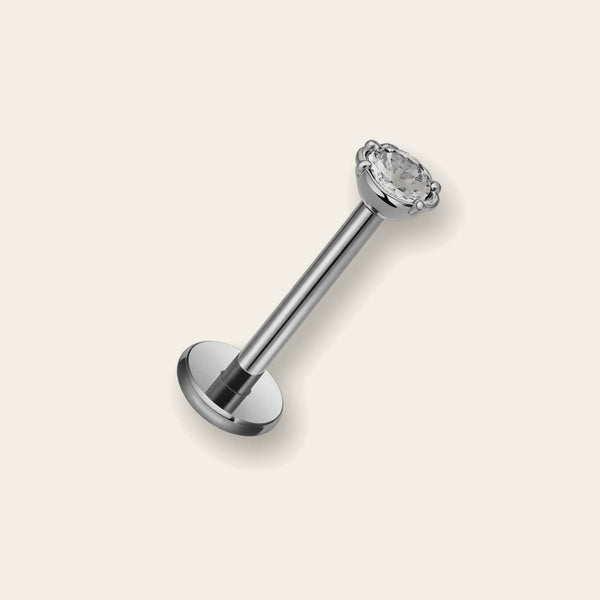
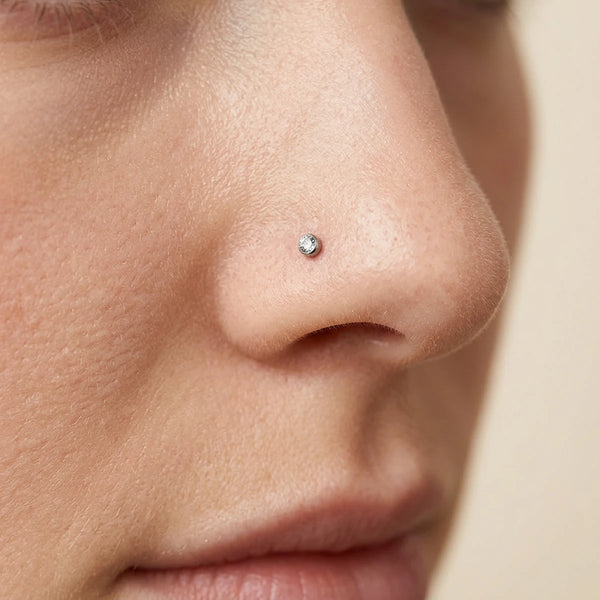
- Start with a well-fitted implant-grade titanium stud. On a nostril, a flat-back titanium nose stud catches far less than a hoop.
- Have the bar downsized by your piercer once the initial swelling has gone.
- Keep aftercare simple: saline, drying, and hands off.
- Keep hair, clothes and pillows away from it as much as you can.
- Wait until it's fully healed before moving to hoops or dangly pieces; Aurea's implant-grade titanium jewellery is made for skin that reacts easily.
Frequently asked questions
Are piercing crusties normal?
Yes. Crusties are dried lymph, a normal part of healing. Soften them with saline and wipe them off gently instead of picking them. Pus is different: thicker, yellow or green, and it usually comes with heat and pain.
How long does an irritated piercing take to calm down?
It depends on the cause and on the piercing. Once the trigger is gone, mild irritation often settles within days to a few weeks. If it doesn't improve, or keeps coming back, have a piercer take a look.
Should I take my jewellery out if my piercing is irritated?
Usually not. Removing it from a healing piercing can let the hole close around the problem. Fixing the cause, or having a piercer change the size or style, is usually the better option.
Will an irritated piercing bump go away?
An irritation bump often shrinks once the pressure, movement or reactive metal behind it is gone. A firm bump that keeps growing beyond the hole needs a professional opinion.
— Shop this guide


An irritated piercing is annoying, but it's usually a message rather than a disaster. Find what's bothering it, keep your aftercare simple, leave it alone, and get it checked if it doesn't improve. Given a little peace, most irritated piercings go back to healing quietly.