— The guide
Piercing Healing Time: Chart for Every Placement
How long each piercing takes to heal, from earlobe to cartilage, nose, navel, nipple and tongue, and how to tell when it is truly healed.

Your piercing healing time depends far more on where you're pierced than on anything else. An earlobe can be settled in a couple of months, while a helix, a belly button or a nipple can take the best part of a year. Knowing the typical range for your placement helps you plan when you can swim, sleep on that side or switch to a new piece, and stops you from changing your jewellery too early, which is one of the most common reasons a healthy piercing goes wrong.
Below you'll find one clear chart with every popular placement, then a short section for each family of piercings, the signs that tell you a piercing is healed or still healing, and the habits that quietly slow everything down.
Piercing healing time chart: every placement at a glance
These are typical ranges. Your own piercing may sit at the short or the long end, and some people take longer than the chart suggests. The last column is the earliest point at which a change is usually considered, and only if the piercing is truly healed by then.
| Placement | Typical healing time | Earliest jewellery change |
|---|---|---|
| Earlobe | 6 to 8 weeks | After 6 to 8 weeks, once healed |
| Helix | 3 to 12 months | Not before 3 months, often later |
| Conch | 3 to 12 months | Not before 3 months, often later |
| Tragus | 3 to 12 months | Not before 3 months, often later |
| Daith | 3 to 12 months | Not before 3 months, often later |
| Rook | 3 to 12 months | Not before 3 months, often later |
| Industrial | Often 6 to 12 months | Not before 6 months, often later |
| Nostril | 4 to 6 months | Not before 4 months, once healed |
| Septum | 6 to 8 weeks | After 6 to 8 weeks, once healed |
| Lip / labret | 2 to 3 months | After 2 to 3 months (shorter post from your piercer once swelling settles) |
| Tongue | 4 to 6 weeks | After 4 to 6 weeks (shorter bar from your piercer once swelling settles) |
| Belly button | 6 to 12 months | Not before 6 months, often later |
| Nipple | 6 to 12 months | Not before 6 months, often later |
The pattern is simple: soft, well-supplied tissue such as the lobe, the septum and the inside of the mouth heals fastest, while cartilage and flat or mobile areas like the navel and nipples take much longer.
Why healing times vary so much
A piercing heals by building a tunnel of new skin around the jewellery, from both ends towards the middle. How quickly that happens depends on a few things:
- Blood supply. Soft tissue with plenty of blood vessels, like the lobe or the tongue, repairs itself quickly. Cartilage has a much poorer supply, so it rebuilds slowly.
- Thickness of tissue. A longer tunnel, such as a conch or an industrial, simply has more to heal than a thin lobe.
- Movement and pressure. Navels bend every time you sit, nipples rub against clothes, and ears get slept on. Every knock interrupts the repair work.
- You. General health, sleep, stress, smoking and how gently the piercing is treated all play a part. Two people with the same piercing on the same day can heal months apart.
Earlobe piercing healing time
The lobe is the easiest place to heal: usually 6 to 8 weeks. It's soft, fleshy and well supplied with blood, and it isn't under much pressure. Even so, a lobe that feels fine at three weeks is often still fragile inside. Wait until the full range has passed, and until there's no tenderness or crust at all, before switching to hoops or heavier earrings. Stretched or upper lobes, and lobes that get snagged on hair or a phone, can need a little longer.
How long does a cartilage piercing take to heal?
Ear cartilage usually takes 3 to 12 months. That's a wide range, and it's normal to land anywhere inside it. Cartilage piercings are also the ones most prone to irritation bumps, often from sleeping on them, headphones or jewellery that's too long once the swelling has gone down. Patience pays off here more than anywhere else.
Helix piercing healing time
A helix, along the upper rim of the ear, usually heals in 3 to 12 months. Because it sits right where your pillow, hair and glasses arms go, it gets bumped a lot, and many people find theirs lands towards the longer end. A helix is often pierced with a stud first rather than a ring, since a hoop moves more and can slow healing; your piercer will advise.
Conch piercing healing time
The conch goes through the thick cartilage in the bowl of the ear, and the typical range is the same 3 to 12 months. That thickness means a longer tunnel, so swelling can be more noticeable at first. Earbuds pushing on the jewellery are a common cause of setbacks, so swap to over-ear headphones or the other ear while it heals.
Daith piercing healing time
The daith, the fold of cartilage just above the ear canal, also usually takes 3 to 12 months. It's tucked away and isn't slept on as much as a helix, but earbuds, hair and cleaning product residue can still bother it. It's often pierced with a ring, which a piercer fits with enough room for initial swelling.
Tragus and rook
The tragus (the small flap in front of the ear canal) and the rook (the inner ridge above the daith) both sit in the usual cartilage range of 3 to 12 months. The tragus is often bothered by phone calls and earbuds; the rook by its curved, slightly awkward channel. Neither likes being fiddled with.
Industrial
An industrial is two cartilage piercings joined by one long bar, usually across the top of the ear. It's often quoted at around 6 to 12 months, because both holes have to heal while held at a fixed angle by the same bar, and any knock moves both at once. Good placement for your ear shape matters a lot, so pick a piercer who checks your anatomy first.
Nose piercing healing time
Nose piercings heal at very different speeds depending on whether they go through the nostril or the septum.
Nostril
A nostril piercing typically heals in 4 to 6 months. It goes through thin cartilage and gets touched more than you'd think: washing your face, blowing your nose, applying make-up or pulling on a jumper. A nostril often feels fine after a few weeks, yet still shrinks or closes quickly if the jewellery comes out, which is a sign it hasn't fully healed.
Septum
The septum is usually pierced through the soft strip of tissue just in front of the cartilage, which is why it's one of the quicker ones: around 6 to 8 weeks. It can be tender at first and crusts easily, but it tends to settle quickly if you leave it alone. Avoid flipping a fresh septum ring up and down, since that movement keeps irritating the channel.
Belly button piercing healing time
A navel piercing usually takes 6 to 12 months. The skin there folds every time you sit or bend, waistbands rub against it, and it's easy to catch. A curved bar that fits your anatomy well, loose high-waisted clothes and not sleeping on your front all help. Navels are also among the placements most prone to rejection, so if more of the bar starts to show over time, see your piercer early rather than waiting.
Nipple piercing healing time
Nipple piercings commonly take 6 to 12 months, and it isn't unusual for them to feel tender now and then for most of that time. Bras, tops and seatbelts rub against them, and a piercing that's caught once can feel irritated again for weeks. A well-fitted barbell, soft breathable fabrics and gentle care make a real difference. If you're pregnant, planning to breastfeed or have any concerns, talk to your piercer and your doctor.
Tongue and lip piercing healing time
The inside of the mouth heals remarkably fast. Tongue piercing healing time is usually 4 to 6 weeks, although the first days bring a lot of swelling, so the first bar is deliberately long. Once the swelling has gone down, a piercer often swaps it for a shorter bar so it doesn't knock against your teeth and gums.
Lip and labret piercings usually heal in 2 to 3 months, because they go through the outside skin as well as the mouth. The same downsizing step applies: a long post at first, then a shorter one fitted by your piercer. Rinsing after meals is part of the routine for oral piercings; your piercer will tell you what to use.
Healed on the outside is not healed on the inside
This is the part that catches most people out. A piercing heals from the surface inwards: the two ends close and look calm long before the tunnel in the middle has matured. So a piercing can look perfect, stop hurting and stop crusting, yet still be fragile inside, which is exactly when people are tempted to change their jewellery.
That's why the full range matters, not the day it stops being sore. If you take the jewellery out of a piercing that only looks healed, it can shrink or close within hours, and pushing a new piece through can tear the fragile inner lining and set you back to square one.
Signs a piercing is healed vs still healing
Usually still healing:
- Tenderness when you touch it, sleep on it or knock it.
- Redness or a pink ring around either hole.
- Crusties (dried, pale-yellow lymph) forming on the jewellery.
- Swelling that comes and goes, especially after a bump.
- The holes look slightly wet, shiny or raw.
- It's still within the typical range for that placement.
Usually healed:
- No pain, swelling or redness, even when the jewellery is gently moved.
- No crust or discharge for several weeks in a row.
- The skin at both holes looks like the skin around it, dry and smooth.
- The full typical healing time has passed.
If in doubt, a piercer can tell you in a minute. A thick, green or dark discharge, spreading redness, heat or throbbing pain are not healing signs at all; read our guide to an infected piercing and see a doctor.
What slows piercing healing down
- Changing the jewellery too early, even "just to try" a new piece.
- Touching and twisting. Every touch brings bacteria and moves the healing tissue.
- Sleeping on it, or pressure from earbuds, headphones, glasses, hats or tight clothes.
- Snags and knocks from hair, towels, jumpers and seatbelts.
- Harsh products such as alcohol, hydrogen peroxide or tea tree oil.
- Pools, lakes and hot tubs while the piercing is fresh.
- Reactive metal or poorly finished jewellery, which can keep a piercing irritated. Our materials guide explains which metals suit healing skin.
- Jewellery that's the wrong length: too short and it presses, too long once swelling is gone and it moves around.
- General health: poor sleep, stress, smoking and illness can all make healing slower.
A setback doesn't mean you're back at day one, but it often adds weeks. If your piercing suddenly looks puffy or crusty after being calm, our guide to an irritated piercing helps you find the cause, and if a small lump appears next to the hole, see our guide to piercing bumps.
The aftercare routine in two lines
Clean twice a day with sterile saline, let it soften any crust, and pat dry with clean paper. The rest of the time, leave it alone: no twisting, no harsh products, no fiddling. Our full piercing aftercare guide covers the routine, sleeping and swimming step by step.
When can you change your jewellery?
Only once the piercing is fully healed, not just comfortable. Use the chart above as the earliest point, check that all the healed signs are there, and if possible have your piercer do the first change, especially on cartilage and nostrils. The exception is downsizing: once the initial swelling has gone, a piercer may swap a long bar for a shorter one, which actually helps healing. Our guide on how to change a piercing walks you through it. When you do change, stay with a metal that's gentle on newly healed skin, such as implant-grade titanium jewellery like Aurea's.
Frequently asked questions
How long does a piercing take to heal?
It depends on the placement: from around 4 to 6 weeks for a tongue and 6 to 8 weeks for a lobe or septum, to 3 to 12 months for ear cartilage and 6 to 12 months for a navel or nipple. Use the chart above for each placement.
Which piercing heals the fastest?
Tongue piercings are usually the quickest, at around 4 to 6 weeks, followed by earlobes and septums at around 6 to 8 weeks. Soft, well-supplied tissue heals faster than cartilage.
Which piercing takes the longest to heal?
Cartilage piercings such as the helix, conch or industrial, and navel and nipple piercings, take the longest. Many need most of a year, and some take longer.
Can I make my piercing heal faster?
Not really, but you can avoid slowing it down. A simple saline routine, no touching, no sleeping on it, no early jewellery changes and well-fitted, body-safe jewellery give it the best chance of healing within its normal range.
Why does my healed piercing still get irritated sometimes?
Even a healed piercing can flare up after a knock, a snag, a night sleeping on it or a new piece of jewellery in a reactive metal. Go back to gentle saline cleaning and remove the cause; if it doesn't settle, see your piercer.
Can I take my jewellery out once it's healed?
For short periods, a fully healed piercing will usually stay open, but young piercings can still shrink quickly, sometimes within hours. Leave jewellery in as much as possible for the first year or so.
Want to see where each of these placements sits? See our ear piercing chart and the types of nose piercings.
— Shop this guide

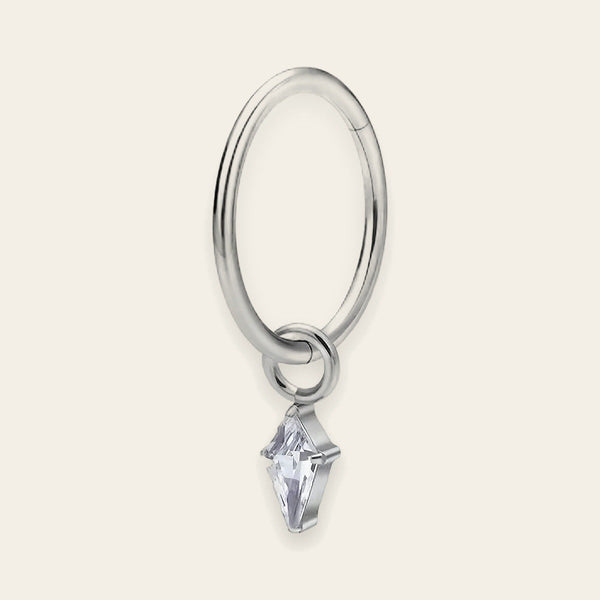
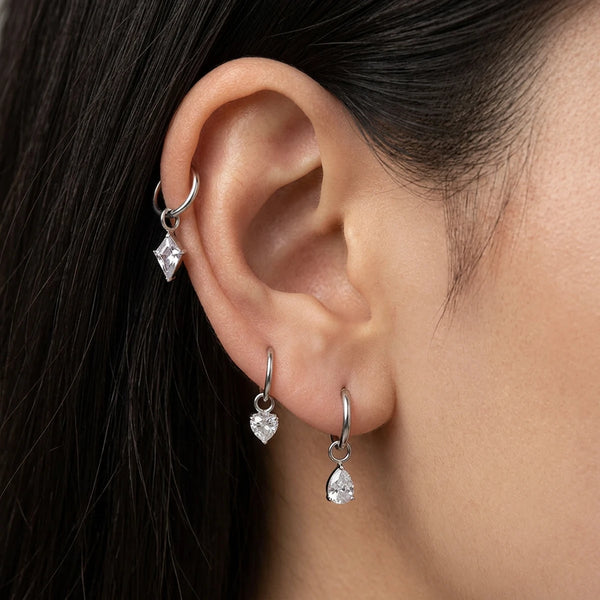
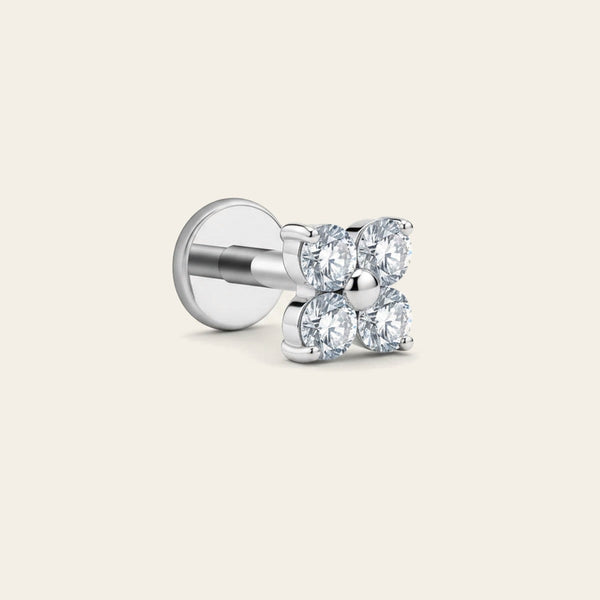

Every piercing has its own timeline, and the slow ones aren't doing anything wrong. Look up your placement, count from the day you were pierced, keep your aftercare simple and leave the jewellery alone until the healed signs are all there. A little patience now means a piercing that's comfortable for years.