— The guide
Piercing Rejection: Signs, Causes and What to Do
How to recognise a rejecting or migrating piercing, which placements are most at risk, why it happens and what to do.

Your piercing looks a little different lately. More of the bar is showing, the skin between the holes looks thinner, maybe the jewellery hangs at a new angle. That could be piercing rejection — your body slowly pushing the jewellery out towards the surface, the way it would push out a splinter. It's not dangerous, and it's not your fault, but acting early makes a real difference to how it heals. Here's how to recognise it, why it happens, and what to do.
What is piercing rejection?
When you get pierced, your body has two options: build a healthy tunnel of skin around the jewellery, or treat it as a foreign object and try to get rid of it. Rejection is the second one. The body gradually grows new tissue behind the jewellery and pushes it forward, until it eventually comes out of the skin completely.
Migration is the same movement, but it stops before the jewellery comes out: the piercing shifts to a new, stable position. A migrated piercing may be perfectly fine — just not where it started.
Signs your piercing is rejecting
- More jewellery is visible than when you were pierced — the bar looks longer, or the balls sit further from the skin.
- The holes look bigger or have moved closer together.
- The skin between the holes is thin, shiny or see-through — you can make out the bar underneath.
- The jewellery hangs differently, droops or sits at a new angle.
- The skin around it stays red, flaky or tender long after it should have healed.
Rejection usually comes without pus, heat or fever — those point to an infection instead. If you're not sure which you're dealing with, our guides to an infected piercing and to piercing bumps help you tell them apart.
Which piercings reject most?
Rejection is most common on piercings that go through a flat surface of skin rather than a fold or edge:
- Belly button — especially on a shallow or "outie" navel, or after weight changes and pregnancy. See our guide to belly button piercings and pregnancy.
- Eyebrow and other surface piercings (nape, hip, sternum). Nipple piercings can migrate too, especially if the bar is too short.
- Bridge and some smiley piercings.
Ear piercings through cartilage — helix, conch, daith — and nostrils reject far less often, though it can happen after repeated trauma.
Why piercings reject
- Anatomy and placement. Too little tissue between the holes, or a placement that doesn't suit your body shape. An experienced piercer will tell you honestly if a placement isn't right for you.
- Jewellery that's too thin. A very fine bar acts like a cheese wire under pressure. Thicker gauges spread the load — our gauge and size guide explains the numbers.
- The wrong shape or length. A straight bar where a curved one is needed, or a bar that's too short and pressing.
- Pressure and snagging. Tight waistbands on a navel piercing, sleeping on it, clothes catching.
- Heavy or reactive metal. Heavy charms and nickel-containing alloys add strain and irritation. Implant-grade titanium is light and well tolerated — see our materials guide.
- Changes in your body: weight changes, pregnancy, illness or stress can all affect healing.
What to do if your piercing is rejecting
- See your piercer early. If it's migrating slowly, a thicker gauge, a different shape or a better-fitted bar can sometimes stop it.
- Don't wait until it grows out by itself. If it's clearly rejecting, removing the jewellery before it breaks through the skin leaves a much smaller, flatter scar.
- Look after the skin once it's out: clean with sterile saline while the holes close, and keep the area moisturised once healed.
- Wait before re-piercing. Most piercers recommend waiting several months, until the scar is soft and settled, then re-piercing slightly deeper or in a better-suited position.
How to lower the risk of rejection
- Choose an experienced piercer who checks your anatomy before piercing, and accept their advice if a placement isn't right for you.
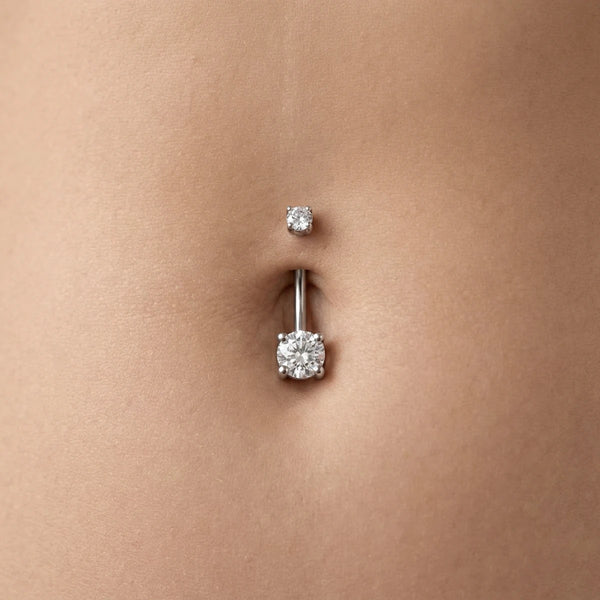
- Start with implant-grade titanium jewellery in a suitable gauge and shape — for a navel, a well-fitted curved bar like our titanium belly button ring.
- Avoid tight clothes and pressure on a healing piercing.
- Don't change to heavy or dangly jewellery until it's fully healed — our guide to changing a piercing explains when.
- Follow a simple saline aftercare routine and leave it alone the rest of the time.
Frequently asked questions
How do I know if my piercing is rejecting?
The clearest signs are more of the bar showing over time, holes that grow or move closer together, and thin or see-through skin over the jewellery. It usually happens without pus or fever.
Can you stop a piercing from rejecting?
Sometimes, if you catch it early — a piercer may switch you to a thicker or better-shaped bar and remove pressure. Once the skin over the bar is very thin, it's usually better to take it out and let it heal.
Can I re-pierce after rejection?
Often, yes. Wait until the area has fully healed and the scar is soft — usually several months — and have a piercer assess it. They may re-pierce slightly deeper or choose a different position.
Why is my belly button piercing rejecting?
Navel piercings reject more than most because they go through a flat area of skin that moves and stretches a lot. Shallow navels, tight waistbands, thin bars, weight changes and pregnancy all add strain.
— Shop this guide



Rejection can happen to anyone, even with perfect care. Spot it early, take it out before it grows through, and give your skin time — many people get re-pierced later and the second one heals beautifully.